

Overseers: Who Steps In When You Can't
A fiduciary, conservator, or agent under a Durable Power of Attorney can be one of the most important people in your life — yet most of us never think about choosing one until a crisis forces the decision. Planning ahead puts you in control.
Book a Free ConsultationFiduciaries & Conservators
Interviewing a fiduciary or conservator before you ever need one helps you pick the right person while you're still clear headed and in control, rather than letting a court or crisis choose for you.
A fiduciary or conservator often has broad control over your money, property, and sometimes even your health and living situation. Interviewing them early lets you assess their experience, ethics, and fit with your family dynamics.
If you wait until you're incapacitated, a judge may appoint someone you don't know well — such as a public guardian or a neutral professional — which can be more stressful and expensive for your family.
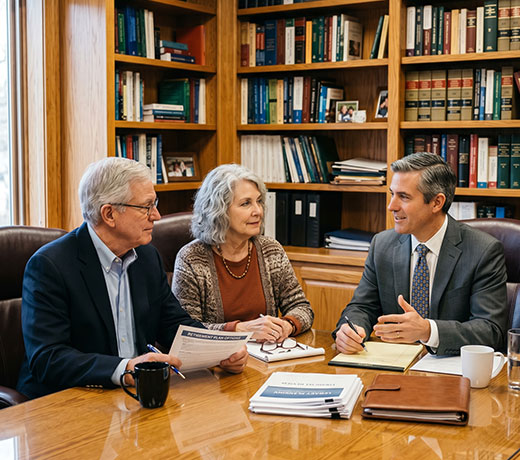
Why Choosing in Advance Matters
The benefits of making this decision early — before a health event or family crisis — are significant. Here's what advance planning protects you from.
Why It Matters in Advance
- A fiduciary or conservator often has broad control over your money, property, and sometimes even your health and living situation. Interviewing them early lets you assess their experience, ethics, and fit with your family dynamics.
- If you wait until you're incapacitated, a judge may appoint someone you don't know well — such as a public guardian or a neutral professional — which can be more stressful and expensive for your family.
Practical Benefits of Interviewing Early
- You can compare several candidates, ask about fees, check licenses, and see how they communicate — so you're not rushing under pressure when a crisis hits.
- Choosing in advance can help prevent family conflict, as you have clearly stated who you trust to step in, and you can name them in powers of attorney or estate planning documents.
Interviewing a fiduciary or conservator ahead of time is a form of "due diligence insurance" that protects you, your assets, and your family if you ever lose capacity. It is one of the most proactive steps a Bay Area senior can take — and one of the least commonly done until it is too late.

Durable Power of Attorney
A Durable Power of Attorney (DPOA) is a legal document that lets you appoint someone you trust — your "agent" — to handle financial and legal matters on your behalf. What makes it "durable" is that it remains in effect even if you become incapacitated. It can be effective immediately or only if a specific condition is met, such as a doctor determining you're unable to manage your affairs.
For seniors, a DPOA is essential because it ensures continuity and avoids court involvement. Without one, your family may have to go through a costly and time-consuming court process — such as conservatorship — just to gain the authority to help you if something unexpected happens.
A DPOA also allows you to choose who will act for you. This person can pay bills, manage accounts, handle property matters, and coordinate with professionals — someone you trust to follow your wishes and act responsibly.
Ultimately, a Durable Power of Attorney provides peace of mind. It helps protect your finances, reduces stress for your family, and ensures your affairs are handled smoothly if you're unable to do so yourself.
What Your Agent Can Do Under a DPOA
The scope of your agent's authority is defined in the document itself. A well-drafted DPOA can be as broad or as limited as you choose. Common powers include:
Financial Management
Pay bills, manage bank accounts, handle investments, file tax returns, and oversee day-to-day financial matters on your behalf.
Property Matters
Manage, sell, or refinance real estate and other property — including your home — according to your instructions and best interests.
Coordinating Professionals
Work with your attorney, financial advisor, accountant, and medical team to ensure all aspects of your affairs are handled in a coordinated and informed way.
A Durable Power of Attorney covers financial and legal matters. It does not authorize your agent to make medical decisions on your behalf. For health care decisions, you need a separate Advance Health Care Directive (AHCD) — which names a health care agent and outlines your treatment preferences. Most Bay Area estate planning attorneys recommend having both documents in place as part of a complete plan.
Choosing the Right Agent
Your agent under a DPOA will have significant authority over your financial life. This is not a role to assign based on convenience or family tradition. The right person is someone who is trustworthy, organized, financially responsible, and capable of making difficult decisions under pressure — while always keeping your best interests first.
It is also important to name a successor agent — someone who steps in if your first choice is unable or unwilling to serve. And as with all estate planning documents, review your DPOA every few years or whenever your circumstances change significantly.
In California, a Durable Power of Attorney must be signed in front of a notary public or two witnesses to be valid. Your agent cannot be one of your witnesses.