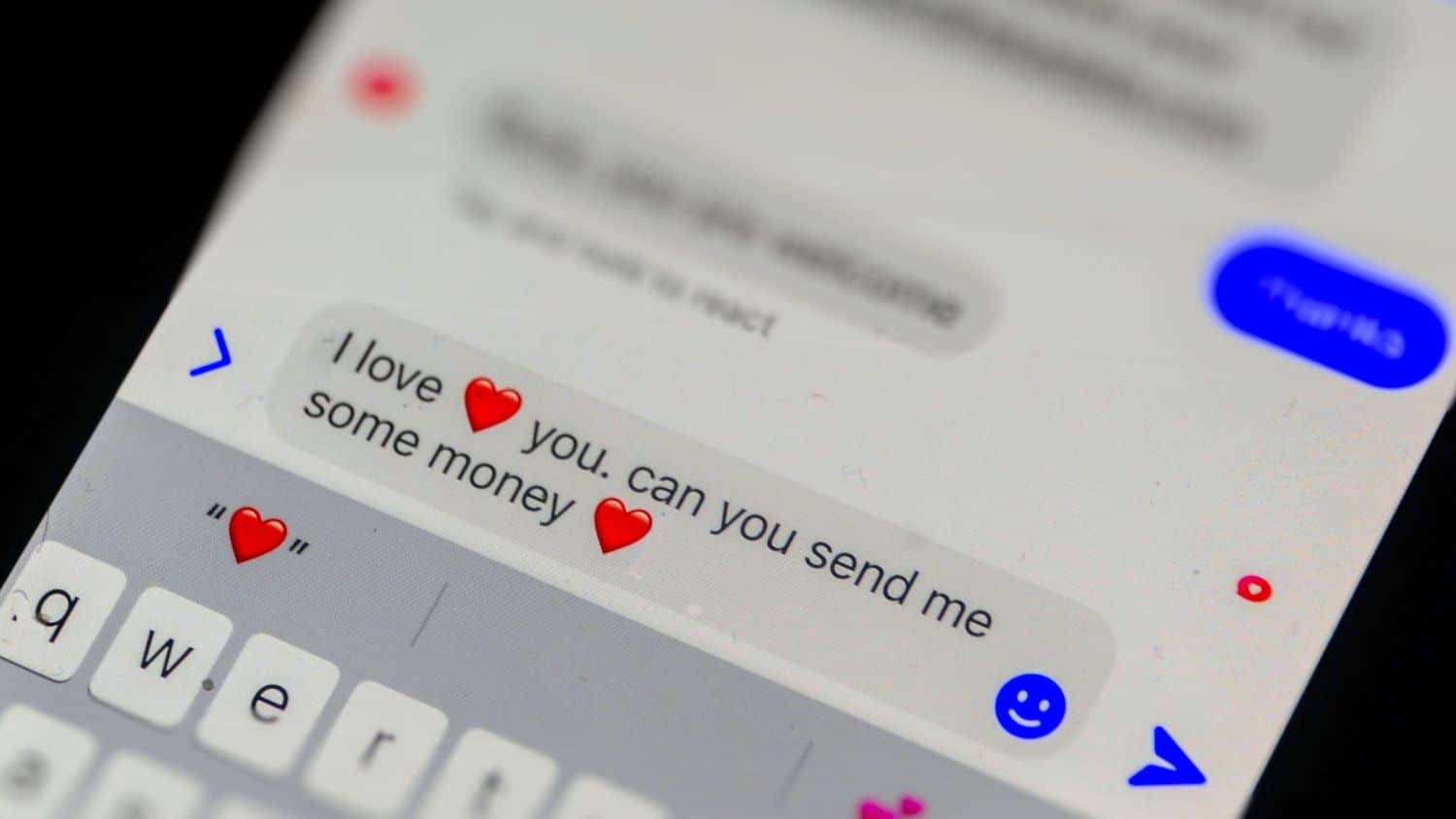
My oh my, how times have changed. Romance scams used to be a clumsy email from a “prince” with a generous offer. Now they run on AI, complete with cloned faces, cloned voices, and a level of patience that would almost be admirable if it weren’t aimed at your bank account.
Here’s the good news. Once you learn how the scammers operate, you can spot them, block them, and toss them to the curb, which makes online dating fun again. Anyone who has spent time on the apps has run into a few too many “handsome widowed engineers working on an oil rig.”
Celebrity Imposter Scams
Celebrities have always been catnip for fraudsters. The pitch is some flavor of: send money to collect a prize, donate to a “charity,” or buy the miracle product your favorite star supposedly endorses. The celebrity may be entirely innocent. In fact, plenty of them are victims too, their faces borrowed without permission.
AI has made this much easier. So-called deepfake videos can now clone a celebrity’s face, expressions, and voice convincingly enough to fool a lot of people. The security firm McAfee even publishes a list of the celebrities most exploited by deepfake scammers, and Taylor Swift currently sits at the top in both the U.S. and globally, with Scarlett Johansson, Jenna Ortega, Tom Cruise, and Brad Pitt among the others. When a familiar face shows up in your feed, your guard naturally drops. That’s exactly the point.
Celebrity Romance Scams
Here is where it turns heartbreaking. In one widely reported case, a woman in France lost close to $850,000 (some reports put it near $900,000) to someone posing as the actor Brad Pitt over the course of about a year. The scammer eventually claimed he needed a kidney transplant and sent a photo of “Pitt” in a hospital bed. The photo was fake. So was the story that his fortune was tied up in his divorce. By the time the truth surfaced, she had emptied her account.
The real Brad Pitt called it awful that scammers exploit the bond between fans and celebrities, and urged people never to respond to unsolicited online messages. He isn’t alone. Reese Witherspoon, Sandra Bullock, and Tom Hanks have all warned fans about scams using their likenesses. Hanks put it bluntly: don’t lose your hard-earned money.
A Double Whammy
Just when you think you’ve seen everything, along comes a plot twist. Police in North Carolina arrested a woman accused of scamming a man out of at least $100,000. He thought he was investing in a company called “Tesla 1.” When questioned, the woman claimed she was also a victim: she believed she was in a relationship with Elon Musk and was helping “Elon” buy cryptocurrency. She admitted she eventually realized she had been duped, but police say that didn’t stop her from continuing her own scheme. So far, no one has been arrested for impersonating Musk. It’s scams all the way down.
The Numbers Worth Knowing
This isn’t a rare problem that happens to other people. A 2026 AARP survey found that nearly 1 in 10 adults age 50 and older has had an online romantic connection that eventually turned into a request for money or a nudge to invest in cryptocurrency. Adults 50 to 64 were targeted at more than twice the rate of those 65 and older, likely because they’re more active online. Even more sobering, nearly half of adults over 50 said they aren’t knowledgeable about scammers’ tactics.
And the losses sting. The Federal Trade Commission has reported a median romance-scam loss of around $2,000, the highest median of any imposter-scam category. Half the room may shrug at “median.” The other half just did the math on what $2,000 buys, and it is not nothing.
The Red Flags
Across enough profiles, the fakes start to follow a pattern. Here are the tells worth a swift block.
Bad grammar when messaging
The profile is eloquent, clever, beautifully written. Then you message the actual human behind it and they can barely string a sentence together. When the messaging doesn’t match the polish of the profile, that mismatch is a flashing sign. If something doesn’t add up, block and move on.
Love bombing
When a stranger showers you with adoration before you’ve met, it can feel wonderful. Remember: the person on the other end is still a stranger. Love bombing is a classic manipulation tactic designed to fast-track trust, and trust is what they’ll later cash in when the “emergency” arrives and they ask for money. Anyone you’ve never met in person asking for money is a giant red flag and very possibly a fraud.
Moving you off the safe site
If someone quickly asks to switch to text, WhatsApp, or email, be wary. Decline to leave the dating platform and a scammer will often simply evaporate, which tells you everything you need to know.
Photos that belong to someone else
Trust, but verify. Go slowly, ask questions, and examine the photos. You can run an image through Google Images, TinEye, or similar tools. If that “new flame” turns out to be a stock model or a stranger’s vacation pics, the profile is a fake. Block, delete, and report it to the dating site.
Date Smart, Date Happy
It can feel discouraging to realize how many scammers are out there warming up their scripts. But here’s the flip side. Once you understand how romance scams work and what to watch for, the fear turns into something better: control. You stop second-guessing and start steering. Once you learn to date smart, dating can become fun again.
Frequently Asked Questions
What is a romance scam?
It’s a con where someone builds a fake online relationship to gain your trust, then manipulates you into sending money, gift cards, or cryptocurrency, or into sharing personal and financial information.
Are older adults really at higher risk?
Adults over 50 are heavily targeted. A 2026 AARP survey found nearly 1 in 10 adults 50+ had an online romantic approach that led to a request for money or crypto, with the 50 to 64 group hit at more than twice the rate of those 65 and older.
How do AI deepfakes make scams worse?
Scammers can now clone a celebrity’s or stranger’s face and voice, making fake video and audio look convincingly real. McAfee reports that familiar faces, Taylor Swift most of all, are widely exploited to win trust before the ask for money.
What are the biggest romance-scam red flags?
Messaging that doesn’t match a polished profile, over-the-top affection from a stranger (love bombing), pressure to move off the dating site, refusal to meet or video chat, and any request for money.
How can I verify if a photo is fake?
Use a reverse image search through Google Images, TinEye, or similar tools. If the same photo appears on a model’s page or someone else’s profile, the account is almost certainly fake. Block, delete, and report it.
What should I do if I think I’ve been scammed?
Stop sending money immediately, save your messages and records, report it to the dating platform and to the FTC at ReportFraud.ftc.gov, and tell someone you trust. There’s no shame in it. These scams are designed to fool smart, capable people.
Sources
- AARP — Romance Scams Put Millions of Adults 50+ at Risk (Feb 2026)
- AARP Research — Romance Scams Survey (50+ awareness data)
- McAfee — Most Deepfaked Celebrities (incl. the Brad Pitt case)
- AARP — How to Protect Yourself Against Online Romance Scams
- Federal Trade Commission — Report Fraud
This is a sensitive topic. If you or someone you love has lost money to a romance scam, you’re not alone. Reporting it helps, and there’s no shame in being targeted by a professional con.